Inclusive Play Programme puts children’s right to play at the centre of learning in Northern Ireland

Northern Ireland’s focus on inclusive play has strengthened with the launch of a new school-based programme designed to improve children’s learning environments through play.
The Inclusive Play Programme has been officially launched as part of the Special Educational Needs Reform Delivery Plan, with the first group of schools beginning the eight-week programme in May 2026.
Discover more news in the latest issue of PlayNation.
Delivered in partnership with PlayBoard NI, the initiative aims to embed inclusive play into everyday school life and support children’s social, emotional, behavioural and cognitive development.
The programme arrives alongside wider calls for a more coordinated approach to children’s play in Northern Ireland, following the publication of Playing Out – Understanding Play Deprivation in Northern Ireland by PlayBoard NI and the International Play Association Northern Ireland branch.
Together, the programme and report highlight the growing importance of inclusive, accessible and developmentally rich play opportunities across schools, early years settings and communities.
Inclusive play programme supports children with SEN
The Inclusive Play Programme has been developed as part of Northern Ireland’s wider Special Educational Needs Reform Delivery Plan.
It focuses on using play as a practical, evidence-informed way to support children with diverse needs, including those with special educational needs.
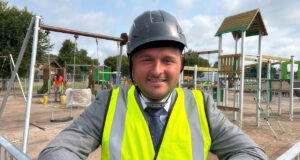
“There is growing evidence that play is essential to children’s development, particularly for those with SEN,” explains Education Minister Paul Givan.
“Embedding inclusive play into everyday school life will support the diverse needs of pupils, while strengthening relationships, improving engagement and enhancing learning outcomes.”
The programme includes specialist input from play therapists and is designed to help schools create more supportive, engaging and inclusive learning environments.
By giving children access to meaningful play experiences, the programme aims to support key areas of development, including communication, confidence, emotional regulation, social interaction and problem-solving.
The initiative also recognises the role of adults in creating inclusive play opportunities. Teaching staff, non-teaching staff, parents and carers are expected to benefit from training, tools and guidance that help them support children more effectively through play.
Programme to reach 48 settings over three academic years
The Inclusive Play Programme is funded through the Public Sector Transformation Fund and will be delivered in 48 settings over three academic years.
Its first phase began with schools implementing the eight-week programme in May 2026, including Stepping Stones Playgroup at Our Lady of Lourdes Primary School in Belfast.
“We are delighted to be one of the first schools to take part in this exciting programme, which supports children through engaging, hands-on play experiences,” says Edwina Weiniger, Chair of the Stepping Stones committee.
“It also offers valuable training for staff, parents, and carers to strengthen inclusive practice. With its strong emphasis on outdoor learning, the programme aligns closely with our Forest School ambitions, building a lasting legacy of inclusive play within our pre-school nursery community in North Belfast.”
The use of an eight-week format gives schools and early years settings a structured way to embed inclusive play into their environment, while also creating space for staff development and family engagement.
For schools, nurseries and early years providers, the programme offers a model that connects play with wider learning, wellbeing and inclusion objectives.
It also supports the idea that inclusive play should not be treated as an additional activity, but as part of everyday educational practice.
Outdoor learning and inclusive environments
A strong theme within the programme is the importance of outdoor learning and hands-on experiences.
Outdoor play can support children’s physical development, independence, curiosity and social confidence. It can also give children more freedom to explore, take manageable risks and interact with their peers in less formal settings.
For settings with Forest School ambitions or outdoor learning priorities, inclusive play provides a practical route to creating environments where more children can participate fully.
This is particularly important for children who may face barriers in traditional classroom environments or structured indoor activities.
By focusing on inclusive, adaptable and engaging play experiences, the programme supports schools in building environments that respond to the needs of the whole child.
Playing Out report highlights play deprivation
The launch of the Inclusive Play Programme comes as PlayBoard NI and IPA NI continue to raise awareness of play deprivation in Northern Ireland.
Their report, Playing Out – Understanding Play Deprivation in Northern Ireland, examines the factors that restrict children’s access to developmentally important play opportunities.
Published to mark the International Day of Play, the report highlights the need to protect every child’s right to play and calls for a more strategic approach across Northern Ireland.
Play deprivation can be shaped by a range of factors, including where children live, the availability of safe outdoor spaces, family circumstances, social inequality, accessibility, and changes in how children spend their time.
For the play sector, education leaders and policymakers, the report underlines the need to look beyond individual settings and consider the wider conditions that allow children to play freely and safely.
Why play matters for children’s development
Play is widely recognised as a fundamental part of childhood. It helps children develop physical competence, creativity, resilience, communication skills and social understanding.
It also gives children opportunities to make sense of the world around them, build friendships, test ideas, navigate uncertainty and develop confidence.
For children with additional needs, inclusive play can be especially valuable. It can support participation, reduce isolation and create shared experiences that help children feel part of their school or community.
The focus on play also connects with children’s rights. Article 31 of the United Nations Convention on the Rights of the Child recognises every child’s right to rest, leisure, play and participation in cultural and recreational life.
This rights-based perspective is central to the conversation around play deprivation and inclusive play in Northern Ireland.
A call for a coordinated play strategy
One of the key issues raised through the Playing Out report is the need for a coordinated policy framework to support children’s right to play.
“Despite increasing recognition of its value, Northern Ireland currently lacks a coordinated policy framework to support the child’s right to play,” says Alan Herron, Chief Executive of PlayBoard NI.
“Strategic action is needed to strengthen the conditions that enable play, including development of a Northern Ireland Play Strategy.”
While the value of play is increasingly recognised across education, health and community development, access to play remains inconsistent.
A strategic approach could help bring together schools, play organisations, local authorities, community groups and policymakers around a shared commitment to improving play opportunities.
This could include better planning for inclusive outdoor spaces, more support for play-based learning, stronger community play provision and clearer recognition of play within children’s wellbeing strategies.
For the play industry, the report provides further evidence of the need for high-quality, inclusive and accessible play environments that serve a wide range of children and communities.
What it means for schools and play providers
The Inclusive Play Programme and Playing Out report both reinforce the same message: play is not optional in childhood development.
For schools, the programme offers a practical model for embedding inclusive play into daily routines and learning environments.
For play providers, designers and community organisations, the wider discussion around play deprivation highlights the importance of creating spaces that are accessible, engaging and inclusive from the start.
For policymakers, the report adds weight to calls for long-term action that protects play as a core part of children’s health, learning and wellbeing.
As the Inclusive Play Programme expands across 48 settings, it will provide an important example of how play can be used to support children with diverse needs while strengthening inclusion across school communities.
Inclusive play moving up the agenda
The launch of the Inclusive Play Programme and the publication of Playing Out – Understanding Play Deprivation in Northern Ireland mark an important moment for children’s play in Northern Ireland.
Together, they reflect growing recognition that play supports learning, wellbeing, inclusion and child development.
They also highlight the need to ensure every child has access to safe, meaningful and inclusive play opportunities, regardless of background, ability or circumstance.
For schools, communities and the wider play sector, the message is clear: inclusive play has a central role to play in helping children develop, participate and thrive.
For more information read Playing Out – Understanding Play Deprivation in Northern Ireland.